
Do you see yourself as a leader?
Leadership can be such a hard concept for some people to grasp. They can go to all kinds of conferences, attend seminars, read books and still not fully understand what it means to be a leader (and end up just being another “manager”.)
Early on when I first started my current job, I was fortunate enough to be able to attend a PMI Symposium (for those unfamiliar, PMI stands for Project Management Institute) and I got to meet with a wide variety of people from different industries. This experience is part of where I got a feel for different leadership styles.
From what I could tell, you could boil down what it means to be a leader into a few key elements. Do I exhibit them? Sometimes. Usually as the situation calls for it.
Some of those elements can be summed up with a simple image I snagged from the Internet.
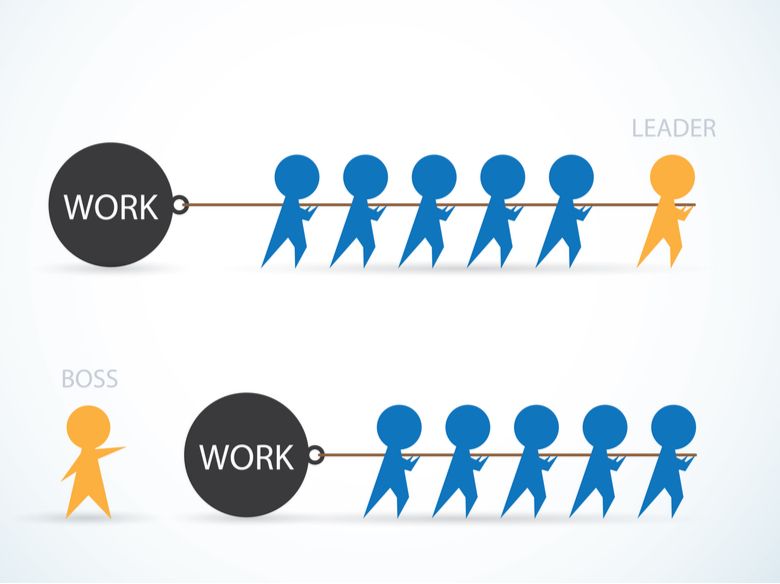
Okay, so the image says “boss” in place of “manager” but whatever, same difference.
Anyways, the point here is that the leader is connected to and participating in the work versus the manager/boss who is disconnected and just telling people what to do. This may look different depending on circumstances of the work, but the core concept of working alongside the people they lead is what’s important.
Back to the prompt itself, do I see myself as a leader? Sometimes. It’s just a matter of circumstances. If I’m on a project and I own a piece/deliverable/objective that requires me to work with and coordinate people then I end up doing a bit of a mix. I’m not usually a Subject Matter Expert for the work that needs to be done, so it’s not like I get to participate the same way as the leader in the image above, but I’m not just going to tell people what to do and expect results without trying to understand the work they’re doing. I want to work alongside them so I can better assist in the ways I am able to, whether that be in coordination efforts or communications with other people. Whatever it is they need, I try to help.
One of the other things about the image above that I like to point out is that the leader is in front of their people. When I look at that it reminds me that leaders I’ve seen and worked with who stood out are the ones who stand in front to represent and protect the people doing the work. Mind you, one thing that can’t be conveyed in the image is credit. Leaders, in my mind, don’t simply take all the credit for the work that gets down. This is where I like to see myself as a leader (when it’s necessary for me to step into the role) because I fully recognize that if I’m not the one doing the work then I want to lift up the people who ARE.
After all that’s been said, I do want to point out that I’m not the kind of person who enjoys being the center of attention, which is often why I don’t automatically and immediately raise my hand to take on roles of leadership. I’m much more comfortable doing the work because I find it more rewarding and satisfying to learn, understand, and be capable of doing it.


 The Dragon's Grove